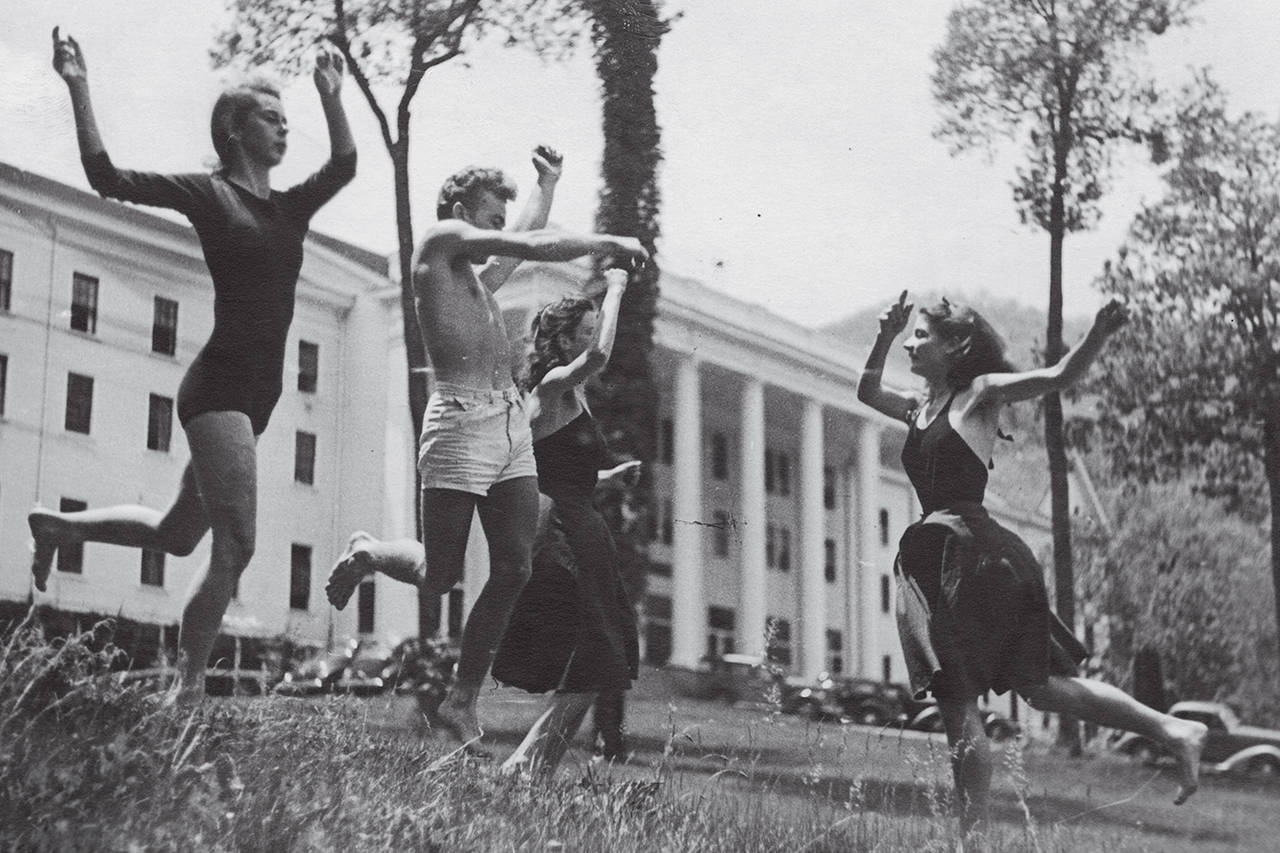

When I first learned about Black Mountain College, I felt an immediate connection to its revolutionary approach to arts education. This experimental school, nestled in the mountains of Asheville, North Carolina, operated from 1933 to 1957 and challenged every conventional notion of what an art school could be.
What made Black Mountain College so extraordinary was its belief that art shouldn't exist in isolation from life.

Students and faculty lived, worked, and created together in a true community of practice. The curriculum broke down the artificial barriers between disciplines – painters worked alongside poets, musicians collaborated with dancers, and everyone contributed to the daily operations of the college, from cooking meals to maintaining the grounds.
Some of my greatest artistic heroes either taught or studied there: Anni Albers, whose innovative textile work redefined fiber art; Ruth Asawa, whose sculptural forms seem to capture light and movement itself; and Josef Albers, whose explorations of color and perception continue to influence artists today.

These artists didn't just create groundbreaking work – they lived it, breathed it, and shared it as part of a larger creative ecosystem.
This holistic approach to artistic education and community is precisely what inspired me to create Art Life Practice.
Like Black Mountain College, I believe that creativity flourishes when it's woven into the fabric of daily life, and when learning happens through doing.
ALP carries forward that same spirit of integration – where art isn't separate from life, but is life itself, expressed through creative practice and genuine human connection.

About the Author