No matter that it's been years since I was a student, I still associate September as the start of the school year. There's something about the changing light and that back-to-school energy that makes me want to dive into learning mode again.
In honor of the start to the school season, here are a handful of art books that I return to again and again, continually offering new insights and inspiration in new and unexpected ways.
These books were actually instrumental in helping me conceptualize and launch Art Life Practice. Each one opened up different ways of thinking about creativity, community, and what it means to live an artistic life—not just make art, but truly integrate creative thinking into everything we do.
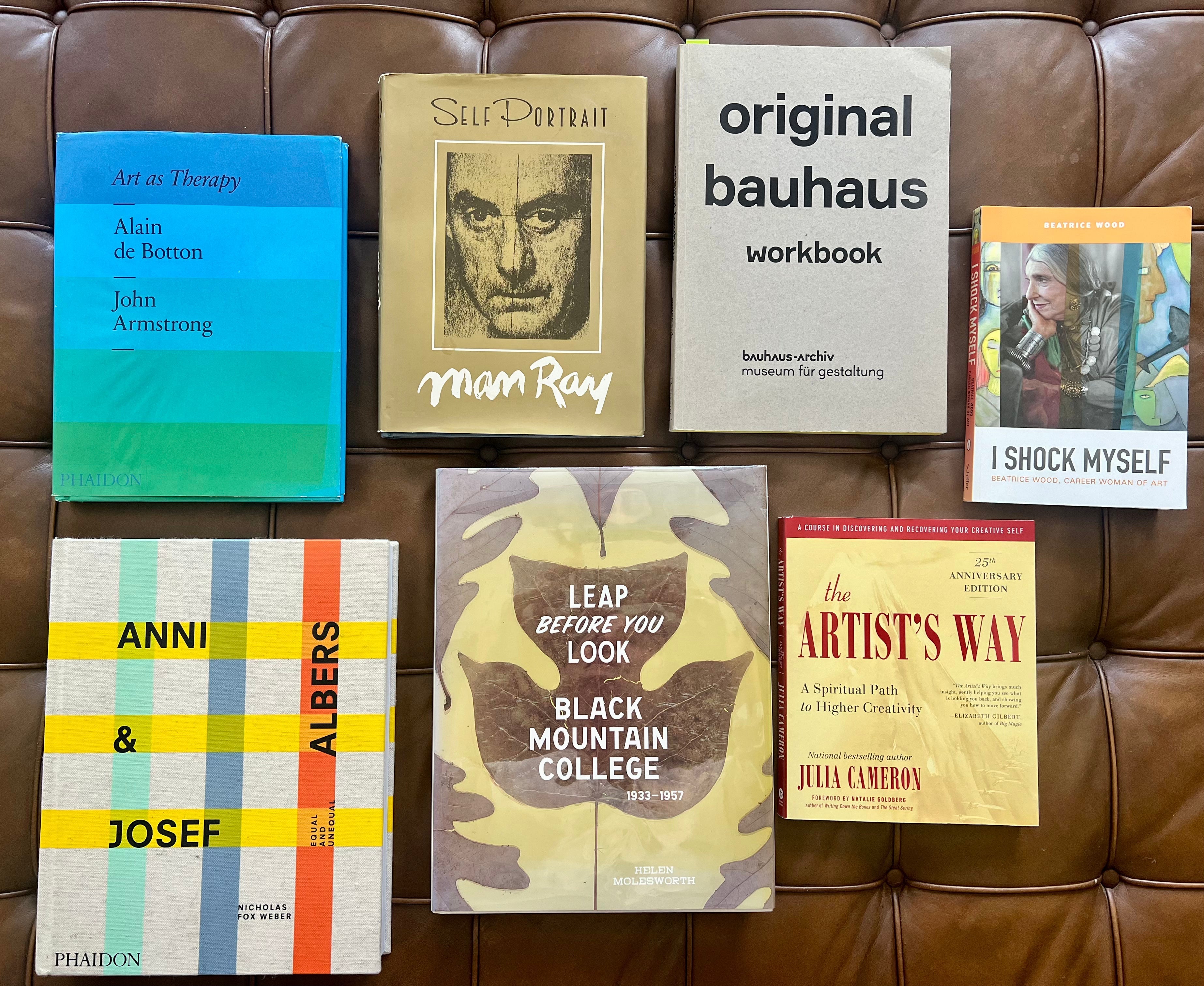
Black Mountain College by Helen Molesworth
This book is pure gold for anyone interested in how radical education can transform lives. Molesworth captures the experimental spirit of this legendary school where artists like John Cage, Merce Cunningham, and Robert Rauschenberg pushed boundaries together. What I love most is how it shows that learning happens best when disciplines blur and everyone—teachers and students alike—are willing to be vulnerable and try new things.
Anni and Josef Albers by Nicholas Fox Weber
The Albers' story is fascinating on so many levels—as individual artists, as a creative partnership, and as educators who revolutionized how we think about color and form. Weber's biography reveals how their relationship influenced their work and how their teaching philosophies at Black Mountain and Yale shaped generations of artists. It's a beautiful reminder that creativity thrives in relationship and community.
Beatrice Wood Autobiography
Known as the "Mama of Dada," Beatrice Wood lived to be 105 and never stopped creating, exploring, or causing delightful trouble. Her story is proof that it's never too late to reinvent yourself artistically. She didn't even start working in ceramics—her most celebrated medium—until she was 40. Reading about her fearless approach to life and art always gives me permission to try new things and embrace being a beginner.
The Artist's Way by Julia Cameron
I know, I know—everyone talks about this book. But there's a reason it's become a classic. Cameron's morning pages practice and artist dates have genuinely transformed how I approach creative blocks and self-doubt. What strikes me most is how she treats creativity as a spiritual practice and reminds us that we're all inherently creative beings, not just the "chosen few."
Original Bauhaus Workbook
This isn't just an art history artifact—it's a hands-on guide to seeing and making that still feels revolutionary today. The Bauhaus approach of learning through doing, of breaking down the artificial barriers between fine art and functional design, continues to influence how I think about creative education. Plus, the exercises are genuinely fun to try, whether you're 15 or 50.
Art as Therapy by Alain de Botton
De Botton argues that art isn't just decoration or intellectual exercise—it's medicine for the soul. He explores how different types of art can help us process emotions, gain perspective, and heal from life's inevitable wounds. This book helped me understand why I felt so drawn to creating Art Life Practice in the first place: because creativity isn't a luxury, it's essential for human flourishing.
Ninth Street Women by Mary Gabriel
Ninth Street Women chronicles the lives and careers of five pioneering female Abstract Expressionist artists - Lee Krasner, Elaine de Kooning, Grace Hartigan, Joan Mitchell, and Helen Frankenthaler - who fought for recognition in the male-dominated New York art world of the 1940s-60s. Gabriel reveals how these women developed revolutionary artistic practices while navigating complex relationships with their male counterparts and challenging the art establishment's gender biases. The book demonstrates how their persistence and innovation helped reshape American art and opened doors for future generations of female artists.
The Lives of Surrealists by Desmond Morris
The Lives of Surrealists offers intimate biographical portraits of key figures in the Surrealist movement, exploring how their personal experiences, psychology, and relationships shaped their revolutionary artistic vision. The book illuminates how these artists transformed personal obsessions and unconscious desires into groundbreaking art that continues to influence contemporary culture. It is a WILD read!
Self Portrait by Man Ray
Self Portrait is the American artist's autobiographical account of his journey from commercial artist to avant-garde pioneer, spanning his involvement with Dadaism, Surrealism, and his innovations in photography and film. Ray candidly discusses his relationships with other artists, his time in Paris, and his development of techniques like rayographs that revolutionized photographic art. The memoir reveals how he seamlessly blended commercial and fine art practices, constantly reinventing himself across multiple mediums.
Each of these books offers something different, but together they paint a picture of what's possible when we take creativity seriously—not as a hobby or profession, but as a way of being fully alive. They've shaped how I think about learning, community, and the role art plays in helping us navigate this beautiful, messy human experience.
About the Author